
Mixed reality (MR), augmented reality (AR), and virtual reality (VR) have revolutionized the way people interact with the virtual world. They’ve enhanced video games, but they’ve also enabled you to improve your eCommerce experience.
Harnessing these technologies for your company requires you to understand their features and differences. This entry will discuss the basics of VR, AR, and MR to help you determine which one you should incorporate into your business.
VR
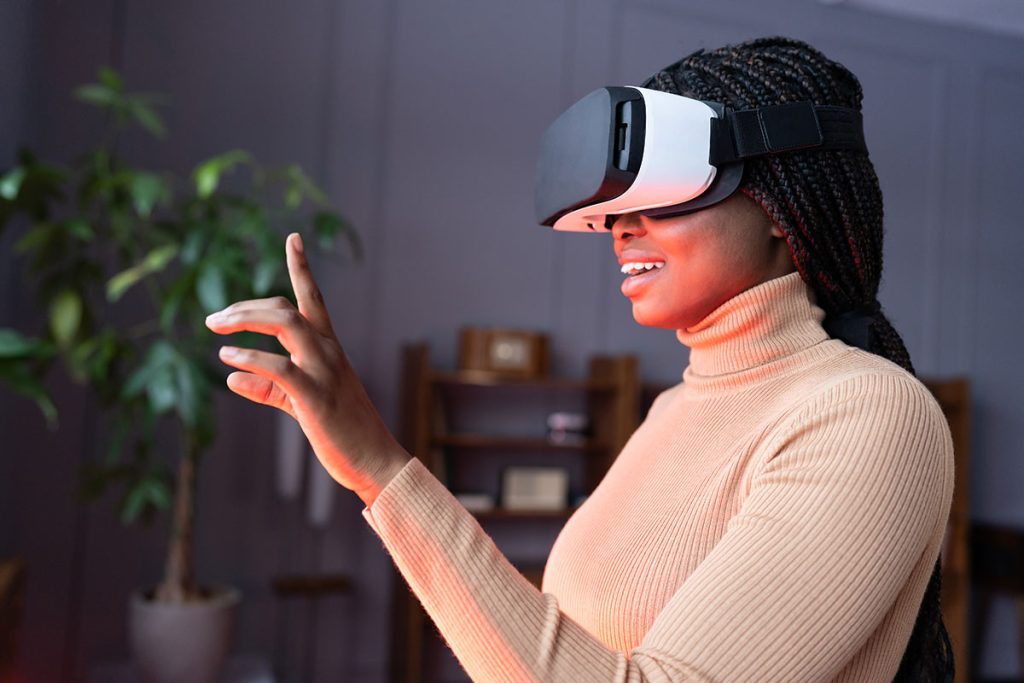
Out of all these state-of-the-art innovations, your customers are probably most familiar with VR. This technology is completely immersive, filing the shoppers’ senses with virtual worlds and headsets. It makes them believe they’re part of a sphere separate from real life.
Through head-mounted displays (HMDs) or headsets, users can see computer-generated imagery (CGI) and hear audio from your virtual space. Some applications merely allow them to explore different areas. Others enable consumers to manipulate digital objects.
Businesses redefine this technology, finding creative ways to immerse potential shoppers by introducing them to digital objects and worlds. It’s especially popular among companies that encourage their customers to perform the following activities:
- Enjoy virtual showrooms
- Explore real estate
- Visit spaces digitally because doing so in real life would be impossible.
Some organizations also utilize VR to streamline marketing campaigns. They highlight products or services by showcasing their capabilities in mesmerizing virtual demonstrations.
For instance, IKEA launched several VR stores in Morocco, Kuwait, and Jordan in 2017 within the corresponding physical shops. Customers visited these small VR-powered locations and leveraged the technology to purchase floor plan accessories. From there, they bought elements in-store or online.
VR is so effective because it accurately replicates the real-life shopping experience. With 360-degree views, customers examine your products from all angles to understand the proportions. This way, they don’t need to rely on lengthy product descriptions, which can be a problem due to language barriers.
Ultimately, VR increases your online consumers’ confidence when implemented correctly. This leads to a higher conversion rate and customer satisfaction.
AR
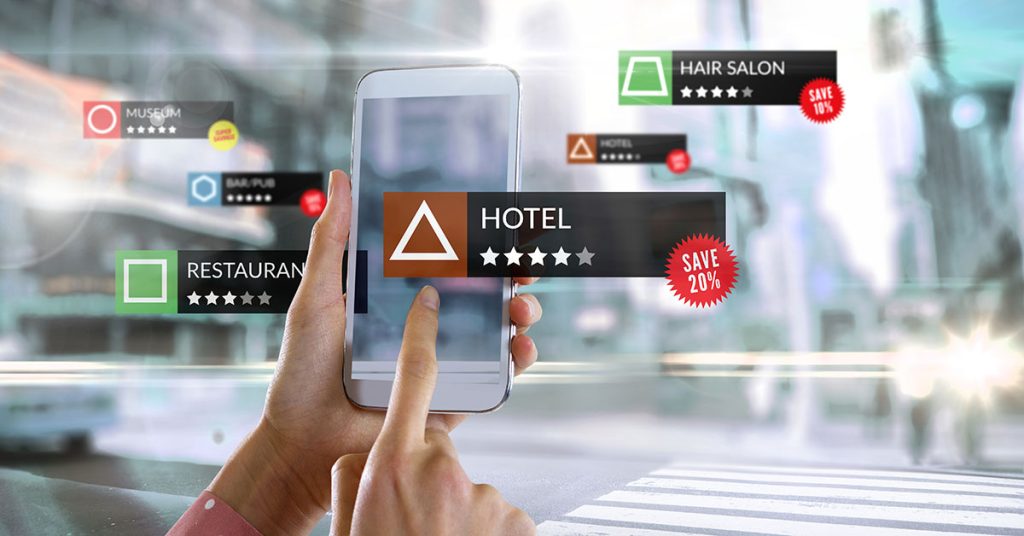
AR is the addition of digital data to your customers’ environment. Unlike VR, it uses an existing landscape and incorporates new details into it.
In other words, it augments the world. It doesn’t create new areas – it just adds artificial elements to make the experience more vivid.
Pokémon Go is probably the most famous example of AR. Users can play it while walking in the park, looking at real-life environments through their smartphones. Digital characters are overlaid in certain places to augment the experience.
The best thing about AR is that it provides a better connection. Rather than engaging your consumers with a straightforward website, you include cutting-edge technology to make the eCommerce journey more immersive.
Plus, you can use AR to encourage your shoppers to interact with each other. Considering that most people hear about new offerings from family and friends, this can be a massive boon for your sales. Providing your users with the ability to communicate and share their opinions elevates their digital experience. Plus, this feature has been present for quite a while through multiplayer games and chatrooms, so you won’t overwhelm your customers.
For instance, suppose you’re holding a virtual event to promote a product. The AR aspect lets your users take a closer look at your offerings while talking with other attendees or the sales team. The result is a more relatable experience that piques your consumers’ interest and persuades them to buy your stuff.
Best of all, you don’t have to rely on real-time interactions only, particularly when it comes to user reviews. If you have headless systems, your content can easily be repurposed by transferring it to the AR realm. Your shoppers can access relevant information by checking out a product in a virtual sphere. This way, they immediately see how other people feel about your offering.
Another great thing about AR is that it lets you gamify content by taking advantage of its entertainment features. While the technology is primarily designed for video games, you don’t have to abandon the reputation. It can serve eCommerce goals perfectly by introducing your products in familiar contexts.
You might have already gamified your store with various elements, like daily deals and loyalty programs. The principle is the same with AR. You can reward some users with points for interacting with a virtual environment. This attracts more customers to the shop, which can increase your sales.
You can also personalize the experience using avatars. This is an effective tactic if you’ve already set up social features that enable customers to interact with each other. By performing specific actions, users unlock exciting customization elements for their avatars. The result is higher engagement.
The possibilities are endless with AR. Just take a look at what other stores are doing to raise interest in their products and services. For instance, some businesses improve access to their daily deals using AR-powered mediums, including virtual scratch-off cards for discount codes. The easiest way to expand this feature to your AR environment is to incorporate physical interactions. In other words, your users are required to make the necessary scratch-off motion to obtain discounts.

Mini-games are an excellent option too. They reinvigorate your eCommerce environment and make it memorable, which advertises deals more successfully.
In a nutshell, you can apply AR to your eCommerce with tablets, smartphones, and many other devices. It lets consumers interact with information and virtual objects. Most companies use it to show shoppers how a product looks in a specific place, like the buyers’ homes. It enables them to try the item before buying it, making them more confident in their purchase.
AR is incredibly advantageous, but it doesn’t always have the same for. There are several types of this technology that offer various capabilities.
Marker-Based AR
Marker-based (recognition-based or image recognition) AR detects objects (markers) before your camera and provide details about the items on a screen. Upon detecting markers, the platform replaces the markers with a 3D model. As a result, your customers can view your products in greater detail from different angles.
Markerless AR
On the other side of the spectrum lies markerless AR. Unlike marker-based solutions, this technology isn’t triggered by specific real-world objects. Instead, your shoppers can place virtual objects anywhere they want. This allows them to take a closer look at the features by moving and rotating them.
Projection-Based AR
The third type of AR is projection-based AR. It projects artificial light onto a physical surface and sometimes enables your customers to interact with it. The holograms in Star Wars and other sci-fi movies are the most common examples.
Location-Based AR
Finally, you can opt for location-based AR. It’s a form of markerless technology that utilizes geographic locations to display your digital content in specific places. Pokémon Go relies on this type of AR.
MR
MR is similar to AR. Both technologies combine the real and virtual world, but MR does so differently. Namely, it enables users to manipulate both physical and virtual objects. Your customers can interact with digital products with tools, hands, or any other means they use in real life. They can rely on specialized devices to bridge the gap between the two spheres. For instance, smart glasses and headsets are perfect for MR-powered environments.
As MR is the most recent immersive solution, it’s not as popular as AR and VR. However, this may change very soon. Some of the most renowned companies, like Lenovo, Acer, and Microsoft, are developing platforms that revolve around MR. As they polish this technology, you can expect more capabilities for your eCommerce application.
Nowadays, most organizations rely on MR to prototype products in a virtual space, improve design modeling, and engineer new offerings. Take Ford as an example. The company uses MR to create new vehicles with the cutting-edge headset called Microsoft HoloLens. Potential customers can check out the models in an immersive environment to ensure they’re buying the right car.
Following this try-before-buy principle, MR is bound to be even more prevalent in eCommerce. It can be a perfect asset for enabling your consumers to get a feel for your product before purchasing it. Once your shoppers arrive in your store and view your offering, the technology can help them physically manipulate your assortment. Accordingly, they can determine whether or not the item “feels” right in their hands.
With smart glasses or other gadgets, your customers can also browse your physical store while checking out different virtual interfaces and components. This combines both spheres into one. The two worlds not only co-exist but also complement each other to create a mesmerizing experience. The only downside is that it may take a while for MR-based platforms to offer the same versatility as AR and VR.
What’s the Verdict?
The choice between VR vs. AR is simple. If you have existing eCommerce infrastructure you want to enhance with powerful technology, go for AR. If you want to create a new environment for your customers to test your products, VR is your best option. But if you wish to combine both, you can’t go wrong with MR.


