
Overlaying the natural world with a digital one isn’t science fiction anymore but a part of everyday life. Augmented reality (AR) uses immersive technologies to enhance the real-world environment, bringing technology to a whole new level of interactivity. Combining computer-generated content with the natural world provides interactive experiences, allowing engagement with the simulation in realtime.
What once was mere entertainment is now a powerful business tool. AR benefits various industries, from healthcare, fashion, retail, and marketing, all the way to the military. However, blending simulation with the real world raises many questions about the actual value of this technology.
So, is augmented reality really the future? Read the article to find out.
What Is Augmented Reality?
In simple words, augmented reality is a digital simulation overlay of the real world. It uses digital sensory stimuli to enhance the physical world. Its primary goal is to highlight particular features of the physical world and improve their understanding. AR can provide more profound and accessible insight that finds use in the real world.
AR uses visual, auditory, and other sensory information to provide immersive experiences to users. It adds to the existing world, providing additional content previously non-existent in reality. Some examples of AR include:
- 3D product models
- Superimposing pictures
- Real-time digital information
- Real-time directions in navigation apps
- Instagram or Snapchat filters to alter the environment or users’ appearance in real time
- Virtual makeup
- Digital 3D model art
For example, tourists can use an AR app like Google Lens to find information about tourist attractions during their visit. They can point the camera towards a feature in the physical world, and the app will provide them with insight. Another example is the Apple Park Visitor Center, allowing users to explore the locality anytime through an iPad, exploring the site from all angles.
The term augmented reality has been around for more than 30 years. While it’s not a new technology, many have been skeptical about its nature for a long time. Among the questions it provoked, many wondered how such an exotic idea would benefit real-world functioning. However, as technology evolved, what once was just an idea became a growing trend in many aspects of life. Today, users can access AR features via mobile phones and web browsers, making this technology reasonably accessible.
Augmented reality constantly evolves and affects many parts of today’s life. It transforms, taking on various shapes and uses. Here’s a roundup of predictions on how AR will influence our lives and work.
Breaking Barriers With Metaverse
Since Facebook’s “Meta” rebranding, the word “metaverse” has been everywhere. This technology is one of the most straightforward understandings of augmented reality. Its primary intent is to delete the boundaries between physical and digital, blending various technologies into one meta-reality.
Metaverse is also known as the “mirror world.” By its most basic definition, the metaverse is a collectively shared digital space. It’s a digital reality which uses augmented reality and virtual reality technologies to create a functional, digitally enhanced 3D space. Metaverses transfers physical existence into a completely virtual world, using human avatars in the digital area.

The first mentions of metaverses date back to 2003, with the launch of “Second Life.” This platform allowed users to interact with each other in a collectively shared virtual space. However, metaverses have evolved until today, and breaking the barriers using augmented reality has become even more vivid.
AR technologies can embed virtual objects in the physical world and vice versa. 3D audio is another technology for boosting the metaverses’ engagement power. Metaverse developers aim to integrate all five main sensory experiences using AR.
For example, AR-generated spatial audio provides almost a real-life sense of sound, adding to the lifelike immersive experience. These features greatly enhance the usability of the metaverse and make this concept closer to the actual environment we live in.
Avatars
Following the metaverse topic, avatars are another perk of augmented reality we commonly use. Even our social media accounts are avatars, in a way. However, using AR takes this concept to a new level. While Snapchat introduced avatars long ago, a new feature allows users to transfer their avatar from the app to the AR-based settings.
Enhancing avatars with AR could eventually lead to broader use of this concept. They can improve hosting virtual meetings and interactions in a metaverse environment. For example, if someone can’t attend a meeting in person, they could use a VR headset and follow it using their avatar. That way, they’ll technically be as present as if they were inside the room. With powerful AR technology on the receiving end, a conference room could display the avatars on a screen or even in 3D. This creates more opportunities for remote work and learning, increasing interactivity, information retention, and productivity.
Digital Collectibles (NFT)
NFTs are a controversial concept due to their purely digital nature. Digital asset ownership has been a hot topic, with varying levels of acceptance. However, blockchain regulations allow NFTs to flourish.
Since NFTs are digital substitutes for physical things, many businesses have introduced them to venture into the digital space. For example, high-fashion houses like Bulgari, Cartier, Hublot, and Louis Vuitton have launched collections sold as NFT copies. Asics, a popular sneakers brand, created an NFT sneaker to encourage physical activity in the digital space. AR wearables extend to the makeup industry and allow for authentic NFT makeup filters. The NFT concept allows the originality of these pieces and lets users wear branded designer clothes in the metaverse.
Augmented reality NFTs are starting to go mainstream since their business potential is enormous. AR can visualize any product, making it more accessible. Backed by NFT, AR-based content is predicted to become a new revenue for brands striving towards digital.
Mobile AR
Mobile devices make an integral part of our everyday lives. Delivering augmented reality via mobile is a great way of making it mainstream. It’s one of the most explosive growth areas for AR development. Since it’s vital to allow people to experience its benefits on the go, mobile AR apps are becoming more powerful than ever.
Mobile technology is evolving, and so do the capabilities for providing more immersive AR experiences. Some examples of AR require carrying additional hardware, like mobile projection devices, allowing for progressive AR apps to function. On the other hand, many of these mobile AR apps allow for “stealth” experiences, and others might not realize that someone immerses in the AR experiences.
A famous example of an AR app that went viral was Pokémon GO, which sported an augmented reality mode. This popular game uses the phone camera to scan the physical world and allows players to seek AR-generated Pokémon.
The concept of mobile AR spans beyond gaming, tourism, and social media. If technology advances appropriately, it will allow smartphones to display ads in virtual reality, removing clutter from the real world. Imagine if all the billboards in Times Square provided more interactive ads when viewed through your phone.
AR and Marketing
Augmented reality provides a powerful marketing tool. Providing customers with an opportunity to engage with the content brings conversions. Immersive is a strong card for marketers. Adding it to any marketing material makes brands stand out from the competition. These new digital advertising models have exponential growth in marketing campaigns, bringing experiential marketing upfront.
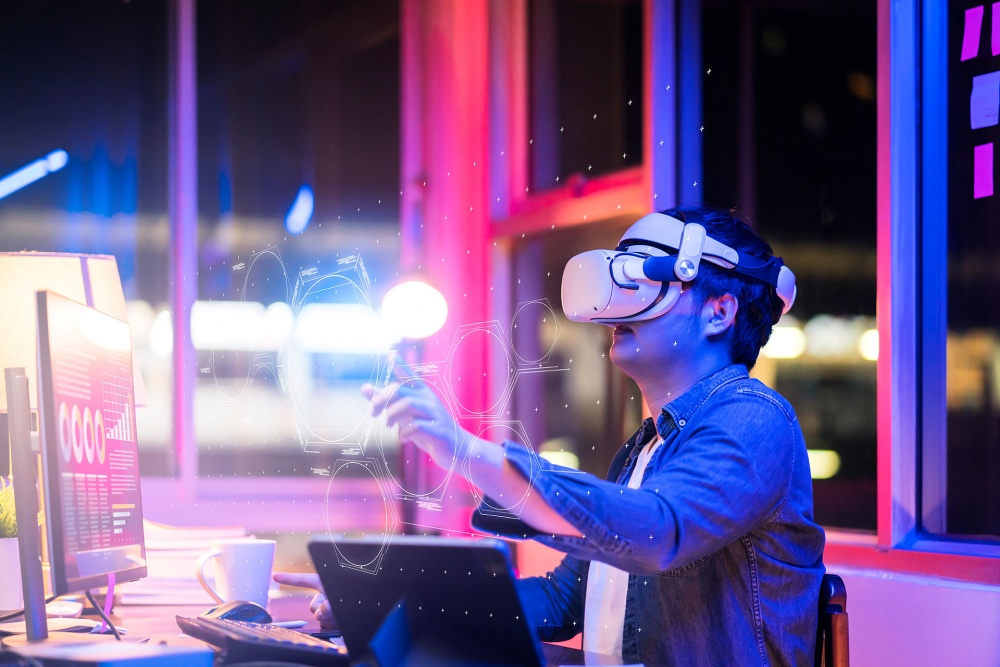
Adding 3D AR features to business cards, guides, or product descriptions gives customers more detail about the brand. AR helps engagingly deliver information, allowing consumers to try on the product before buying. WebAR experiences are rife, allowing users to experience AR content in the web navigator immediately.
Some of the common examples of using AR in marketing are the following:
- Visualizing and testing products
- Virtual try-on of makeup or clothes
- AR-enhanced events
- Branded games
- Branded Instagram or Snapchat filters
- Producing AR user-generated content
AR allows customers to experience the brand before consuming it in physical form. In times of digital marketing reign, brands communicate through images, animations, and video. Enhancing these types of content with AR and adding an experiential layer boosts the overall brand experience. Using AR in marketing provides a memorable experience for consumers, and experiences are what stay in people’s memory.
Digital Is the New Real
The modern world integrates heavily with digital experiences. Most people can’t imagine their everyday life without smartphones, and AR-smart devices continue to emerge. Introducing AR technologies to various aspects of business is bound to level up the digital experiences we know now. These features will become even more accessible with the years to come.
Metaverse technologies are responding to AR market demands, and we can expect significant growth soon. With these digital assets being the ultimate future of digital reality, current AR practices play a big part in their rise to power. Since digital reality is bound to become our new normal in the following years, getting acquainted with current AR practices can help ventures achieve their potential as soon as possible.


