
By almost any metric, AI is the most groundbreaking technological innovation of the 21st century. It brings game-changing benefits and almost endless applications. Every major industry has embraced it in some form or another. That includes the software as a service (SaaS) world. There, providers have quickly begun integrating AI into products like CRMs.
But how, exactly, is AI impacting those products? Let’s see.
An Introduction to AI in SaaS
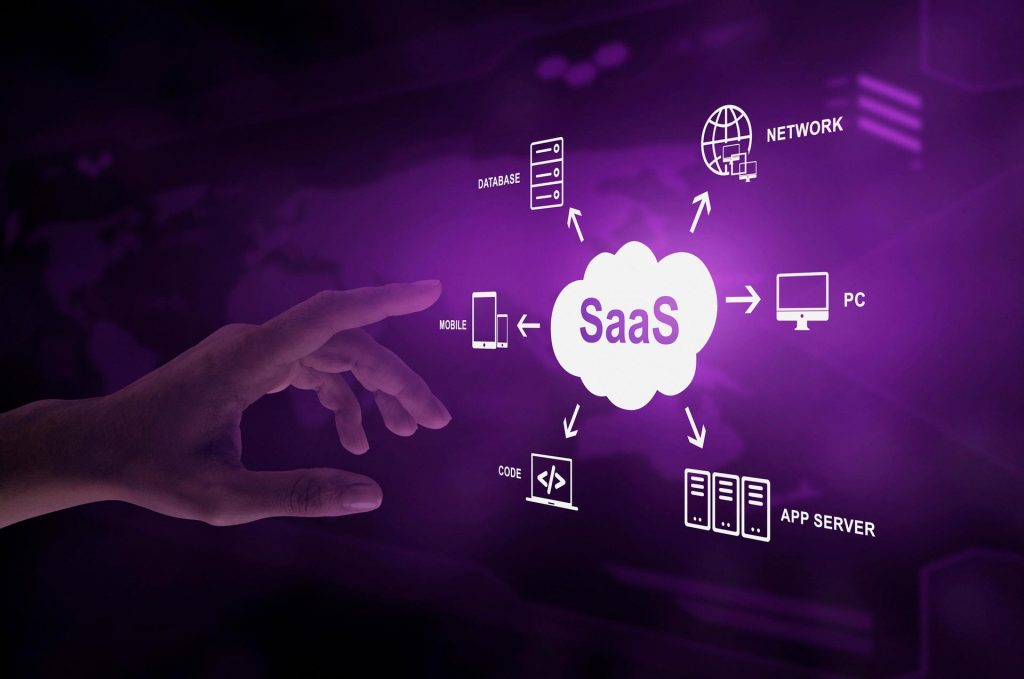
SaaS is a commercial model in which providers host their own apps. Users subscribe to access these apps online. So they don’t have to download or install anything to their devices. They can use the SaaS apps in their browsers instead.
There are loads of examples of this in action, from email and office tools to streaming services. The SaaS industry is immensely valuable, too. Recent figures put the industry valuation around $390 billion. Some estimates suggest that it could more than double by 2029.
AI, of course, is artificial intelligence. That’s an emulation of human intelligence in the form of computer systems. This concept was once reserved for the realms of science fiction, yet it’s very much a real-world reality now. There are loads of AI tools available for making content, automating tasks, etc.
AI in SaaS, then, is simply the integration of AI tech into the SaaS sphere. That means AI features and systems in SaaS products, and AI systems being used to make, market, and manage those products by SaaS providers.
AI in SaaS Products: The Benefits
AI isn’t just creeping into software; it’s spreading like wildfire. Experts predict over 80% of enterprises will use or develop AI apps and APIs by 2026. Why? Well, just look at the list of benefits it brings below. It’s no wonder this technology has been adopted to such a broad degree.
- Efficiency: AI does things far faster than normal human workers. You could have a task that’d take a team of workers a week to finish. AI could do it in minutes. The implications of this for SaaS are massive.
- Cost-Effective: Time, money, labor – SaaS products demand lots of investment to make and maintain. Lots of smaller firms struggle with the costs. But AI, through automation and optimization, eases that financial burden.
- Scalability: SaaS products typically need to be scalable to cope with changing levels of demand. AI is almost infinitely scalable. It’s able to dynamically adjust SaaS offerings on the fly to suit users at all levels (startups to enterprises).
- Precision: AI is accurate. That doesn’t make it infallible. It makes mistakes from time to time. But, when given the data and instructions it needs, it tends to be very reliable and consistent. So, it eliminates human error from SaaS product development and maintenance.
- Security: SaaS systems often have layers of cybersecurity: firewalls, anti-malware, etc. Think of AI as an extra layer on top of all that. AI models can monitor platforms, spot suspicious activities, and issue appropriate responses.
- Personalization: AI algorithms are great at understanding and using individual user data. Incorporating them into SaaS solutions makes those solutions more personalized. They can adjust their messaging, interface, and other elements to suit each user.
- Automation: Data entry, reporting, workflow optimization – AI automates all these tasks, taking them off the hands of human workers. This is useful during project management and development for getting tasks done faster and with fewer errors.
- Predictive Analytics: AI can, effectively, see into the future. It can’t predict it with 100% certainty. But it can use whatever data is available to make informed estimations. That’s an invaluable addition to SaaS systems like CRMs for predicting customer decisions.
Real World Applications: How SaaS Companies Are Using AI
Next, a look at how SaaS is actually being implemented in SaaS. As you’ll see, its applications are immensely varied. Thus, it’s an invaluable addition to all sorts of tools, from HR SaaS products to communication and customer service applications.
Optimizing Product Development
AI doesn’t just appear among the functions and features of SaaS products. Lots of brands also harness it to help them build those products. In many cases, it’s used right from the start, when brands first begin their market research and data analysis to come up with their initial product ideas.
AI models are able to read and interpret vast amounts of data incredibly quickly. Firms can use that to help them generate the most promising product ideas and develop plans to make them. AI also helps with coding, bug fixing, prototyping, testing, and other aspects of SaaS development.
Automating Customer Support
Customer support is important in the SaaS sphere. SaaS products are often complex and layered. They have numerous features and functions. So users typically have queries or require assistance in figuring out the best ways to use these tools or resolve problems they encounter.
AI is excellent for this. SaaS firms can set up AI-powered chatbots for 24/7 user support and instant responses to common user queries. These bots can even be integrated into SaaS platforms. CRMs, for example, may have AI chatbot helpers to deliver helpful responses to common queries and transfer others to human agents for more precise assistance.
Personalizing the Onboarding Process
We touched above on the complexity of a lot of SaaS products. That can make them a little tricky to work with in the early stages. New users need onboarding in an efficient, smart way, so they don’t feel overwhelmed or confused.
AI has a part to play here, too. Many SaaS products now come with AI-driven onboarding. It works by letting the AI learn about the user – sometimes through an initial Q&A form, like on Shopify. It then uses that data to construct a tailored onboarding plan.
Marketing Products and Services More Effectively
Marketing, too, is feeling the positive impact of AI. To market anything effectively, you need data. And you need to be able to interpret that data to figure out things like:
- Which are the best marketing channels to connect with our audience?
- What are the most cost-effective ways to raise awareness of our products?
- How do you run the most efficient campaigns, without wasting resources?
AI answers all those questions. SaaS firms use it to conduct deep research on their markets, competitors, and audiences. From there, AI models figure out the most appropriate and value-adding channels to target. Some even build entire marketing campaigns from scratch, saving marketing agents hours of hard work.
Adjusting Pricing Dynamically
SaaS products typically have tiered pricing plans. There are varying monthly or annual costs to suit users with differing budgets and needs. But those prices need to be flexible, ready to dynamically rise and fall in line with market conditions and competitor pricing.
AI helps with that. It analyzes markets in real time, understanding levels of demand and competition to dynamically adjust pricing on the fly. This helps providers get more value from their products, maximize revenue, and remain competitive with only minimal manual oversight.
Strengthening Cybersecurity Across SaaS Platforms
AI-powered cybersecurity is a game-changing integration for modern SaaS solutions. This is because AI has the capacity to monitor and detect possible cyber-attacks or weaknesses within a platform on a round-the-clock basis. Not just that, but it can also take necessary actions to counter any threats it detects.
Incorporated into a CRM, for example, AI-powered security can strengthen the safeguards around customer data. An example of this in action is Zoom, the popular communications platform. It uses AI-driven security tools during live conference calls. This prevents unwanted guests gaining access to the call.
Exploring New Fields of SaaS Development
Another exciting way in which AI is transforming the SaaS industry is by opening new possibilities for product development. Indeed, an entire sub-industry of AI SaaS products has emerged in recent years. Examples include generative AI models, which make text, images, or videos from users’ prompts.
Lots of startups are exploring innovative ways to not just incorporate AI into existing SaaS ideas but to develop new ideas built on the bedrock of AI itself. Like Databricks, which offers AI-powered data engineering. C3.ai is another example, which specializes in predictive AI optimization tools for industries like healthcare.
Producing Reports and Analytics
SaaS solutions are rarely static. They’re dynamic products that have to change with the times to survive and remain relevant. To make the right growth decisions, providers typically produce usage reports and assess various metrics to see where their solutions work well and where they need improvements.
AI can do a lot of that hard work for you. As touched on numerous times above, it’s so fast and efficient at looking at data and deriving insights from it. Thus, it’s becoming a larger part of the analytical sides of many SaaS solutions to influence long-term changes over the course of their lifecycles.
AI – A Driving Force for the Future of SaaS
In summary, AI has quickly become an incredibly important part of the SaaS world, and its influence is growing by the day as new uses and benefits are discovered. Any startups or big brands specializing in SaaS solutions are strongly urged to turn to AI and make the most of its many advantages now, or risk being left behind by more AI-savvy competitors.


